.jpg)
放映 : 非暴力抗爭影片~ 影片全長52分鐘,分二個故事
前段(26分鐘)是【甘地】;後段講【美國黑人爭平等民權】
的故事,(Rosa Parks在公車上堅持[自由座位]所引起的人權革命)
時間 : 6 / 22 ( 三) 暗時 7 點
地點 : 濟南路公投盟建國基地
影片清單
投影播放
2011年6月23日
「非暴力革命─更強大的力量」紀錄片(印度甘地、美國黑人)


2011年6月17日

2011年6月10日
抗議!要求行政院對夏瀛洲言論負責
2011/6/10 10:30 於行政院大門
"國軍"=國民黨黨軍,"共軍"=共產黨黨軍,國共兩黨合作連手併吞台灣這就是"中國軍"的真實意義。

影片
(相片播放)
抗 議 書
時間 : 2011 / 06 / 10/10:30
受文者 : 吳敦義
地點 : 行政院
出席:公投護台灣聯盟蔡丁貴總召,台灣客社張葉森社長,北社李川信秘書長,立法委員涂醒哲立委,台灣民族同盟高金郎代表,主持張銘祐
內容 : ( 如下 )
依媒體報導,前國防大學校長夏瀛洲在中國參加「中山、黃埔、兩
岸情」時已發表 : 「兩岸不分國、共軍,都是中國軍隊」,依此言論更
顯其統戰心態,更表示馬政府執政下的國防與國軍已淪陷。
在此馬政府的軍人及官員可在退休後前往中國,進行所謂的對談,
這種聯共制台的方式,已造成台灣本身的安全危機,更何況中國用兩
千多顆飛彈對準台灣,其馬政府執政更顯示其『流亡政府的本能』不
斷與中國互訪進行統戰,這樣的政府打從心裡已經不屬於台灣人民所
需,夏瀛洲等將領所得來自台灣人民所繳納的稅金,每月乾領十七萬
配座車、傳令等….福利。
此見其心態如馬政府之心態。「選舉一年強調台灣主題,選後三年與中
國交娓」因為他知道自己在台灣的不法性,更表現『中華民國是流亡
政府』,本應該給予強烈抗議。
馬政府的不法性 (流亡) 一再突顯,要以一概全,然而夏瀛洲並不
會是特例,不過是冰山一角而已。我們強烈的期待『中華民國流亡政
府』離開台灣,其流亡政府必須停止訪共的將領、官員其福利,更要
要求我們納稅的流亡政府停止與中國交娓。兩千顆飛彈對準台灣的中
國政府應該停止統戰,台灣人民並不會輕易讓步,其相關流亡官員並
需嚴辦並交由司法嚴辦。張銘祐撰
2011年6月9日
「再談體制外路線2012年大選的戰略」
「台灣民族自我解放運動講座」
議題 : 「再談體制外路線2012年大選的戰略」
主講 : 蔡丁貴教授
時間 : 2011 / 6 / 8 (三) 暗時 7 點
地點 : 濟南路公投盟建國基地

影片清單
投影播放
2011年6月8日
本土社團圓山飯店抗議中國特使Z咖鄭立中
中國特使Z咖鄭立中率團來台,討論中國客自由行等案。
本土社團特在圓山飯店表達抗議台、中的人權自由及台灣主權與兩國黑心食品違害人民健康。
今日正逢中國Z咖特使鄭立中來台灣與馬政府談中國客自由行,我們特別在圓山飯店抗議,對馬英九政府提出質疑:
一、一向與中國國民黨關係良好的統一集團在台灣所生產的飲料產品含有塑化劑,而銷售出口中國的商品不含有塑化劑,在台灣銷售的飲料統一集團身為食品業的龍頭,自己生產的產品含有塑化劑,卻不顧及台灣廣大消費市場而荼毒台灣人。如果沒有這場塑化劑的風暴,台灣人信任的老字號統一企業卻隱瞞,台灣的消費者不知道被毒害多少年,為什麼該集團平常無法自行管控,沒有檢驗出來,還大言不慚的說自己是受害者。然而銷售中國的食品卻不含有塑化劑的成分,這種毒害自己台灣同胞的做法實在令人不恥,為什麼同樣的商品台灣人吃有毒的商品,這樣的企業真是可惡!我們要求統一集團所有商品都要重新檢驗,並研擬相關作法補償台灣人民。
二、這次鄭立中(國台辦副主任)到台灣要與馬政府談論中國客自由行,然而中國國民黨)執政的縣市如新北市、桃園縣、苗栗縣、南投縣、台中市…,都為了搶食中國客到台灣自由行給予補助的方式,而南投縣在為開放自由行已經由一級縣府主管隨行招待,並招待到餐廳吃飯,然而隨著要開放中國客自由行,其餘縣市研擬補助中國客自由行的補助,目前苗栗縣給規劃500元以上新台幣的補助,然而水準較高的歐美日客相對的沒有給予相關補助,分明是拿台灣人民稅金補助水準較低的中國客,然而台灣本國的人民卻沒有相關優惠,根本是在幫馬英九政府拿台灣人民的稅金在替中國政府作業積。
馬英九不斷親中下,台灣人民的無論在台灣自己土地的食衣住行已經被這個政府搞的亂七八糟,在不斷親中的結果下台灣人所受到待遇卻是受到有毒食品的毒害,然而ECFA的效應下我們這些社會大眾的生或更加艱困,反而是圖利大財團與淘空台灣根基,現在中國國民黨更是軟土深掘、欺人太甚,賣台同時更要大喇喇引來中國人來台灣自由行,根本沒考慮到其他因素,如國防安全,是否中國客會脫逃、進行不法勾當…等問題做出解釋,台灣人民怎麼安心,乾脆叫中國客全部戴上「電子腳鐐」,以策安全!優惠國外旅客必須以國際化為原則,以吸引高水準國家的旅客,不能反其道而行,為了政治目的,僅對低水準的中國旅客提供優惠!中國國民黨的這個政策是傷害台灣的旅遊環境的罪魁禍首!張銘祐撰
本土社團圓山飯店抗議中國特使Z咖鄭立中
投影播放

2011年6月4日
「台灣民族自我解放運動講座」─「非暴力抗爭系列」第六講
講題:「美國歐巴馬總統對中東和北非政策發表的講話」導讀者: 蔡丁貴 教授
時間: 2011 /06 /01 (三) 暗時 7 點
地點: 濟南路公投盟建國基地

影片清單
投影播放
歐巴馬總統就美國對中東和北非政策發表講話
OT-1109C | 2011年05月20日
華盛頓哥倫比亞特區 | 2011年5月19日
謝謝你們,謝謝。非常感謝。謝謝。請坐。多謝。首先,我要感謝希拉蕊 ∙ 柯林頓(Hillary Clinton),過去六個月來,她四處奔波,已經接近一個新的里程碑——積累100萬哩的常飛客里程(frequent flier miles)。(笑聲)我每天都依靠希拉蕊,我相信她將作為我國歷史上最優秀的國務卿之一被載入史冊。
在國務院慶祝美國外交史上一個新篇章的開始特別合適。六個月來,我們目睹中東和北非發生非同尋常的變化。在一個又一個廣場、一個又一個城鎮、一個又一個國家,人民奮起爭取自己的基本人權。有兩個國家領導人退位了,還可能有更多的領導人退位。雖然這些國家與我國國土相距甚遠,但我們知道,經濟與安全的力量以及歷史和信仰把我們的未來與這一地區緊密聯繫在一起。
今天,我想談談這一變化——推動變化的力量和我們如何作出反應以弘揚我們的價值觀並增強我們的安全。
在經歷了以兩場代價巨大的戰爭為特徵的10年後,我們已經為改變我們的外交政策做了大量工作。在多年的伊拉克戰爭後,我們撤出了10萬美國軍隊,結束了我們在那裡的作戰任務。在阿富汗,我們遏止了塔利班的擴展趨勢,今年7月,我們將開始撤軍,繼續朝著由阿富汗發揮主導作用的方向過渡。在與“基地”組織及其同夥交鋒的多年戰爭後,我們擊斃了它的頭目奧薩馬∙賓∙拉登(Osama bin Laden),給予“基地”組織巨大的打擊。
賓∙拉登並非殉道者。他是一個宣揚仇恨的殺人狂,鼓吹穆斯林必須拿起武器對付西方,還鼓吹濫殺男女老幼的暴力是通往變革的唯一道路。他否認穆斯林應享有民主與個人權利,主張暴力極端主義;他的核心目標是毀滅,而不是建設。
賓∙拉登及其殺人的願景贏得了一些追隨者。但即使在他亡命之前,“基地”組織已經輸掉了爭取民心之戰,因為絕大多數人認識到殺害無辜無助於他們對美好生活的追求。在我們找到賓∙拉登時,該地區絕大多數人已經把“基地”組織的圖謀看作一條死胡同,中東和北非人民已經將命運掌握在自己手裡。
爭取掌控自己命運的故事六個月前始於突尼西亞。12月17日,一個名叫穆罕默德∙布阿齊齊(Mohammed Bouazizi)的年輕小販因被警察沒收了他用來擺攤的推車而被逼入絕境。這種情況司空見慣。同樣的令人屈辱的事件——踐踏公民尊嚴的政府暴虐行為¬——每天都在世界上很多地方發生,只是這一次的後果不同。在地方官員拒絕聽取他的投訴後,這位從未在政治上特別活躍的年輕人前往省政府,把汽油澆在自己的身上,點火自焚。
在歷史進程中,有時普通公民的行動會激起爭取變革的運動,因為這樣的行動會引起人們心中積聚多年的對自由的渴望。在美國,大家可以回想一下當年那些拒絕向國王繳稅的波士頓愛國者的反抗精神,或羅莎∙帕克斯(Rosa Parks)[在公共汽車上]勇敢地坐在自己的座位上所展示的尊嚴。就這樣,在突尼西亞,這名小販因絕望而採取的行動喚醒了全國民眾的憤慨。數百名抗議者走上街頭,後來增加到數千名。面對警棍甚至子彈的威脅,他們拒不回家——一天又一天,一週又一週——直到一個統治長達20多年的獨裁者最終放棄了權力。
這個革命的故事及其後一系列革命的發生並非偶然。中東和北非國家早就贏得了獨立,但在太多的地方,這些國家的人民沒有贏得獨立。在太多的國家,權力集中在極少數人的手裡。在太多的國家,像這位年輕小販一樣的公民無處求助——沒有誠實的司法機構聽取他的投訴,沒有獨立的媒體為他代言,沒有具有公信力的政黨代表他的觀點,沒有自由公平的選舉可以讓他來選擇自己的領導人。
這種缺乏自決——按自己意志改變生活的機會——也表現在這個地區的經濟上。的確,一些國家很幸運地享有石油和天然氣財富,這導致了一些局部的繁榮。但是,在以知識為基礎,在以創新為基礎的全球經濟中,沒有任何發展戰略可以僅僅以來自地下的東西為基礎。在不賄賂就不能創業的環境中,人們也無法實現自己的潛能。
面對這些挑戰,該地區太多的領導人試圖把本國人民的不滿引向他方。西方被指責為所有弊病的根源,可是殖民主義已結束了半個世紀。反對以色列成為唯一可被接受的政治言論。部落、民族和宗教派別隔閡被利用作為維持政權或從他人奪取政權的手段。
但是,過去六個月的事件告訴我們,鎮壓策略、轉移視線的策略不再奏效。衛星電視和網際網路提供了觀察更廣闊世界的窗口——一個出現了像印度、印度尼西亞和巴西等地的驚人進步的世界。手機和社交網絡讓年輕人以前所未有的方式聯絡和組織。一代新人開始出現。他們的聲音告訴我們,變化不容否認。
在開羅,我們聽到年輕媽媽說:「這就像我終於第一次能夠呼吸到新鮮空氣。」
在薩那(Sanaa),我們聽到學生高呼:「黑夜必將結束。」
在班加西(Benghazi),我們聽到工程師說:「我們的言論現在自由了。這是一種難以言喻的感覺。」
在大馬士革(Damascus),我們聽到年輕人說:「經過第一次大喊,第一次大叫,你感受到了尊嚴。」
這些人類尊嚴的呼喊聲響徹整個地區。這個地區的人民以非暴力的道德力量,在短短半年內促成的變革比恐怖主義份子幾十年產生的變化更多。
當然,如此規模的改變來之不易。在我們今天的時代——24小時新聞循環,不間斷的通訊——人們期待這個地區的轉變在幾週內就可以完成。但這段歷程將需要經過多年時間才會到達終點。在途中,會有順利的時候,也會有不順利的時候。在有些地方,變化將是迅速的,在另一些地方,則是循序漸進的。正如我們已經看到,在有些情況下,改變的呼聲可能轉變成對權力的激烈爭奪。
擺在我們面前的問題是,在這個過程中美國將扮演何種角色。幾十年來,美國一直在該地區遵循一套核心利益:打擊恐怖主義和制止核武擴散、確保商業的自由流通、保衛該地區的安全;支持以色列的安全和追求阿拉伯-以色列和平。
我們將繼續這樣做,因為我們堅信,美國的利益與人民的希望並不敵對,而是對其十分重要。我們認為,任何人都不會從該地區的核軍備競賽中得到好處,也不會從“基地”組織的野蠻攻擊中得到好處。我們認為,世界各地的人都會看到切斷能源供應將造成他們的經濟癱瘓。正如在波灣戰爭(Gulf War)中一樣,我們不會容忍跨國界的侵略行為,我們將恪守對朋友和夥伴的承諾。
然而,我們必須承認,一個僅以對這些利益的狹隘追求為基礎的戰略不會讓人有食果腹,也不會讓人能夠直抒己見。此外,不注重普通人民更廣泛的渴求只會增加縈繞多年的懷疑,即美國靠犧牲他人而追求自己的利益。鑑於這種不信任是雙向的——因為美國人曾因被扣押人質、暴力言論和導致數以千計公民喪生的恐怖襲擊而留下痛苦的烙印——不改變我們的方法有可能使美國和阿拉伯世界之間的分歧循環深化。
這就是為什麼兩年前在開羅,我開始擴大以我們的共同利益和相互尊重為基礎的交往。我當時相信,而且現在也相信,我們不但與這些國家的穩定利益攸關,而且與個人自決利益攸關。維持現狀是不可能的。靠恐懼和壓迫維持的社會也許可以一時帶來穩定的幻覺,但它們是建立在斷層上,終將土崩瓦解。
因此,我們面臨著一個歷史機遇。我們有機會來表明,在突尼西亞街頭小販的尊嚴與獨裁者的野蠻權力之間,美國更看重前者。不容質疑的是,美國歡迎促進自主與增進機會的變革。不錯,與這個充滿希望的時刻聯袂而至的也有風險。但是,在數十年來一直接受這個地區的現狀之後,我們現在有機會來爭取讓該地區變成它本應該有的樣子。
當然,我們在這樣做的時候必須抱著謙恭的態度。並不是美國把人們推上了突尼西亞或開羅的街頭,而是當地人民發起了這些示威抗議行動,最終也必須由當地人民自己決定結果如何。
並不是每個國家都會效仿我國代議制民主的特定形式,而且會有我們的短期利益與我們關於該地區的長期願景並不完全相符的時候。但是我們能夠而且將會闡明一系列核心原則——指引我們對以往六個月發生的各種事件作出回應的原則:
美國反對對該地區人民使用暴力與鎮壓手段。(掌聲)
美國支持一系列普世權利。這些權利包括:言論自由、和平集會的自由、宗教自由、法治之下的男女平等,以及選擇自己的領導人的自由——無論在巴格達(Baghdad)、大馬士革(Damascus),還是薩那(Sanaa)或德黑蘭(Tehran)。
我們支持發生在中東和北非的能夠滿足整個地區普通人民的合理願望的政治與經濟改革。
我們對這些原則的支持並不是我們的次要利益所在。今天,我要在這裏明確宣布,這是一個我們必須將之轉化為實際行動的當務之急,我們還將利用我們所掌握的所有外交、經濟與戰略手段予以支持。
具體來說,首先,促進整個地區的變革,支持向民主過渡將是美國的政策。這項努力始於埃及和突尼西亞,那兩個國家的成敗利害攸關,因為突尼西亞是掀起這場民主浪潮的先鋒,而埃及既是我們的長期夥伴,也是阿拉伯世界最大的國家。這兩個國家都能透過自由與公平的選舉、充滿活力的公民社會、實行問責與高效的民主機構,以及負責任的地區性領導作用樹立優秀典範。但我們的支持還必須擴大到那些轉型尚未開始的國家。
遺憾的是,到目前為止,在太多的國家裡,要求改革的呼聲被暴力壓制,其中最極端的例子是利比亞(Libya),在那裡,格達費(Moammar Gaddafi)向他自己的人民發動了一場戰爭,並揚言要像滅老鼠一樣把他們斬盡殺絕。正如我在美國加入國際聯盟共同干預利比亞局勢時所說,我們無法制止政權對其人民所施加的每一項不公正的行為;我們在伊拉克的經驗讓我們認識到,無論多麼用心良苦,試圖用武力來實現政權更迭,其代價是多麼高昂,而且是何等的困難。
但是在利比亞,我們看到的是迫在眉睫的大屠殺的可能性,我們獲得了行動的授權,我們聽到了利比亞人民要求援助的呼聲。如果我們沒有與我們的北約(NATO)盟友和該地區的聯盟夥伴一起採取行動,數以千計的平民恐怕已經喪生。那樣的情況只會說明:為了保住權力,殺死多少人都在所不惜。現在,格達費的時間已經不多了。他已經失去對國家的控制,反對派已經組織起一個合法的、有信譽的臨時委員會(Interim Council)。當格達費無可避免地下臺或是被罷黜時,數十年的挑釁將劃上句號,利比亞向民主過渡的過程將會開始。
儘管利比亞出現最大規模的暴力,但它並不是國家領導人以壓制手段來維持權力的唯一一個國家。就在最近,敘利亞(Syrian)政權選擇了謀殺並大批逮捕其公民的道路。美國已經聲明譴責這些行徑,並正與國際社會一起採取行動加強對敘利亞政權的制裁,包括昨天宣布的對阿薩德總統(President Assad)及其親信的制裁。
敘利亞人民要求向民主過渡表明了他們的勇氣。阿薩德總統現在可以作出選擇:他可以領導這場過渡,也可以讓出道路。敘利亞政府必須停止向示威者開槍,並允許舉行和平抗議活動。它必須釋放政治犯並停止不公正的逮捕。它必須允許人權觀察員進入達拉(Dara’a)等城市,並開始進行推動民主過渡的認真對話。否則,阿薩德總統及其政權將繼續受到來自國內的挑戰並在國外繼續陷於孤立。
到目前為止,敘利亞一直追隨其伊朗盟友,並就鎮壓策略向德黑蘭求助。這說明了伊朗政權的虛偽,它宣稱支持其他國家抗議者的權利,卻鎮壓本國人民。讓我們記住最初的和平抗議活動發生在德黑蘭街頭,而伊朗政府在那裡殘暴地鎮壓男女示威者,並把無辜的民眾關入監獄。來自德黑蘭建築物頂部的抗議聲今天仍然在我們耳邊回響。一位年輕女子慘死街頭的形象仍然銘刻在我們的記憶之中。我們將繼續表明態度,伊朗人民應該獲得他們的普世權利,應該享有一個不扼殺他們的理想的政府。
眾所周知,我們反對伊朗的不容異見的做法和壓制行為,反對伊朗非法從事的核計畫及其對恐怖活動的支持。但是,如果美國要享有公信力,我們必須承認:我們在該地區的朋友們有時對於那些與我今天概述的原則一致的變革要求並沒有作出應有的反應。在葉門是如此——葉門總統薩利赫(Saleh)需要兌現其轉交政權的承諾——今天在巴林也是如此。
巴林是一個長期合作夥伴,我們致力於保障它的安全。我們認識到伊朗試圖利用那裡的騷亂,認識到巴林政府有維護法治的合法權益。
然而,我們在公開和非公開場合都表明,大規模逮捕和殘酷的暴力與巴林公民的普世權利並不相容,這些做法不會使要求改革的合法呼聲消失。唯一出路是政府與反對派進行對話,而當和平爭取權利的一些反對派人士身陷囹圄時,無法進行真正的對話。(掌聲)政府必須創造對話的條件,而反對黨則必須參與對話,以便為全體巴林人民締造一個公正的未來。
的確,可從這一時期得出的更具廣泛意義的教訓之一是:派系分歧不是造成衝突的必然原因。在伊拉克,我們看到建立一個多族裔、多教派的民主國家的希望。伊拉克人民在爭取民主的過程中拒絕了危險的政治暴力,儘管他們正在承接保護自身安全的全面責任。當然,與所有新興民主國家一樣,他們將面對各種挫折。但是,伊拉克如果繼續走向和平,就會在該地區發揮重要的作用。在他們這樣做的時候,我們將作為一個堅定的夥伴自豪地與他們站在一起。
因此,在未來幾個月,美國必須運用我們所有的影響力來鼓勵這個地區的改革。即使我們認識到每個國家各不相同,我們也必須坦誠地表明我們所堅信的原則,不管是對朋友還是對敵人。我們要傳達的訊息簡單明瞭:如果你們承擔改革所蘊含的風險,就會得到我們美國的全力支持。
我們還必須進一步努力,將我們的接觸範圍擴大到精英人士之外,聯繫將開創未來的群體,特別是年輕人。我們將繼續兌現我在開羅所作的承諾——建立創業者網絡,擴大教育交流,促進科技領域的合作以及防治疾病。在整個地區,我們打算為公民社會提供援助,其中包括那些可能未經政府認可的、敢於揭露不堪事實的組織。我們並將利用科技與人民溝通,傾聽他們的呼聲。
因為事實是,真正的改革不會僅僅透過投票實現。我們必須努力支持講真話和獲得訊息的基本權利。我們必須支持網際網路的自由開放,以及新聞記者——無論是大型新聞機構還是部落格作者個人——的話語權。在21世紀,訊息就是權力;真理不容掩蓋;政府的合法性將最終取決於活躍和知情的公民。
這樣的公開對話很重要,哪怕其中的言論與我們的世界觀不符。我要說明:美國尊重公開表述一切和平與守法的言論的權利,哪怕我們不贊同這些言論,甚至有時強烈反對這些言論。
我們期待著與所有提倡真正的、有包容性的民主的人共同努力。我們將反對任何組織限制他人權利的任何企圖,反對利用強迫手段——而不經[人民的]同意——把持權力。這是因為民主依靠的不僅是選舉,而且是強大和負責任的機構,以及對少數派的權利的尊重。
這樣的寬容在宗教問題上尤其重要。在自由廣場(Tahrir Square),我們聽到埃及各行各業人士高呼「穆斯林、基督徒,我們團結一心」。美國將努力確保這一精神得到發揚——所有宗教信仰都受到尊重,並在它們之間搭建橋梁。在這個世界三大宗教的發源地,不寬容只會導致痛苦和僵滯。為了在這個變革時期獲得成功,什葉派在巴林的清真寺絕不應當遭到毀壞,同樣地,開羅的科普特基督徒(Coptic Christians)也必須享有自由信教的權利。
宗教少數派的情況也同樣表現在婦女權利上。歷史表明,在婦女擁有權利的情況下,國家就更加繁榮太平。因此,我們將繼續堅持婦女與男人一樣享有普世權利——我們將提供針對兒童和母親健康的援助;幫助婦女參與教學或創業;支持婦女爭取讓她們的聲音得到傾聽和競選公職的權利。如果這裡一半以上的人口無法發揮自己的潛力,這個地區也就永遠無法實現自己的潛能。(掌聲)
即使在這個地區促進政治改革和人權的同時,我們也不能將努力僅限於此。我們必須支持這個地區作出積極轉變的第二個途徑是,努力推動向民主轉化的國家的經濟發展。
政治畢竟不是人們上街示威的唯一原因;最終導致許多人走上街頭的一個關鍵因素,是更為經常不斷的與養家糊口相關的擔憂。這個地區有太多的人每天醒來,除了設法度日和也許指望時來運轉以外,無所期盼。這個地區到處都有大量受過良好教育的年輕人,然而由於經濟封閉,他們無法找到工作。實業家雖創意層出不窮,但腐敗使他們無法收益。
中東和北非地區未得到啟用的最寶貴資源是那裡的人民。在最近的示威活動中,人們運用科技手段轉變了世界,也讓我們看到了這些人才。解放廣場上的領袖人物之一是谷歌(Google)一位主管,這不是偶然的巧合。現在需要的是,將這種能量在各個國家逐一匯聚起來,讓街頭的成果透過經濟成長得到鞏固。如同缺少個人機會可以導致民主革命一樣,成功的民主轉型取決於擴大發展和普遍繁榮。
基於我們在全世界的經驗教訓,我們認為必須注重貿易而不只是扶助,注重投資而不只是援助。必須讓這樣一個模式成為我們的目標——它使保護主義讓位於開放;商貿控制權從少數人轉到多數人手中;讓經濟給年輕人帶來就業。因此,美國對民主的支持將基於確保金融穩定;促進改革;讓競爭性市場相互融合並與全球經濟接軌。我們將從突尼西亞和埃及開始。
首先,我們已經要求世界銀行(World Bank)和國際貨幣基金組織(International Monetary Fund)在下一次G-8高峰會上提出計劃,闡明我們為突尼西亞和埃及實現經濟穩定和現代化必須進行的工作。我們必須共同幫助他們克服各自民主運動期間出現的停滯狀態,支持今年將藉由選舉產生的政府。我們也要求其他國家幫助埃及和突尼西亞滿足近期的財政需要。
第二,我們不希望一個民主的埃及受累於過去的債務。因此,我們將為民主的埃及免除高達10億美元的債務,並將與我們的埃及夥伴協作,把這些資源用於促進經濟增長和鼓勵創業。我們還將為埃及擔保10億美元的債務,把這筆錢用於建設基礎設施和增加就業,從而幫助埃及重新獲得市場。我們也會幫助經過民主選舉產生的新政府索回被盜竊的資產。
第三,我們正在與國會協作,建立“創業基金”(Enterprise Funds),在突尼西亞和埃及投資。此類基金將仿照柏林圍牆倒塌後用於支持東歐過渡的基金。海外私人投資公司(OPIC)不久將啟動一項20億美元的貸款計劃,廣泛支持對這個地區的私人投資。另外,我們將與盟友協作,重新確定歐洲復興開發銀行(European Bank for Reconstruction and Development)的投資重點,像在歐洲那樣支持中東和北非的民主過渡和經濟現代化。
第四,美國將在中東和北非推出一項全面的 "貿易和投資夥伴計劃"(Trade and Investment Partnership Initiative)。如果不計算石油出口,這個擁有4億多人口的地區的出口額與瑞士大致相等。因此,我們將與歐盟協作,促進這個地區內部的貿易,擴大現有協議,促進與美國及歐洲市場的整合,為作出一項地區性貿易安排打開大門,使那些推行高標準改革和貿易自由化的國家受益。正如歐盟成員資格被用於在歐洲鼓勵改革一樣,關於建設一個現代化的繁榮經濟的願景也應當成為在中東和北非推動改革的一股強大的力量。
要實現繁榮,還必須拆除阻擋進步的障礙——從人民手中竊取資產的精英階層的腐敗、阻礙把創新想法變成企業的繁縟的審核手續、基於部落或派系分配財富的制度。我們將與倡導改革的議員以及利用科技手段推動增加透明度和向政府問責的社會活動人士協作,幫助政府履行其國際義務,大力反腐敗。-- 政治與人權;經濟改革。
最後,我要講一下我們對該地區方針的另一塊基石,它關係到追求和平。
數十年來,以色列人和阿拉伯人之間的衝突為該地區蒙上了陰影。對以色列人而言,這意味著生活在恐懼之中,擔心校車上的孩子被炸或他們的住宅被火箭砲摧毀,同時痛苦地意識到該地區的其他孩子接受到仇恨他們的教育。對巴勒斯坦人而言,這意味著忍受被佔領的屈辱,永遠沒有機會在自己的國家生活。另外,這場衝突也使中東地區承受更大的代價,致使可能為普通人帶來更大安全、繁榮和權利的夥伴關係無法建立。
兩年多來,本屆政府一直在與有關各方和國際社會共同努力結束這一爭端,但預期的目標卻沒有實現。以色列修建屯墾區的活動還在繼續;巴勒斯坦方面退出了談判。全世界看到雙方的衝突幾十年來纏綿不休,認為這只能是一個僵局。的確有一些人強調,鑑於該地區的種種變化和不確定因素,根本不可能向前推進。
但我不這樣認為。在中東和北非地區的人民擺脫歷史包袱的時刻,實現一個能夠結束爭端並解決所有訴求的持久和平的願望比以往任何時候都更加迫切。對於涉及此事的雙方,這一點已經確定無疑。
對巴勒斯坦人而言,否認以色列合法性的做法只會以失敗告終。九月份在聯合國孤立以色列的象徵性舉動不可能促成一個獨立國家的建立。如果哈馬斯(Hamas)執意要走恐怖和否認的道路,巴勒斯坦領導人將無法實現和平或繁榮。巴勒斯坦人永遠都無法透過否認以色列的生存權來實現自己的獨立。
至於以色列,我們的友誼深深地根植於共同的歷史和共同的價值觀。我們對以色列安全的承諾是堅定不移的。我們還將反對試圖在國際論壇上僅對以色列進行指責的舉動。但正是出於我們之間的友誼,我們必須實言相告:這種現狀是無法持續的,為推動實現持久和平,以色列也必須採取有魄力的行動。
實際情況是,有越來越多的巴勒斯坦人生活在約旦河以西地區。新技術將增加以色列保衛自己的難度。一個正在經歷巨變的地區將促使民粹主義出現,這裡的千百萬人民——而不僅僅是個別領導人——必須相信和平是可能實現的。國際社會已對一個從未產生任何結果的無休止的過程感到厭倦。一個猶太人的民主國家的夢想無法透過永久佔領來實現。
歸根究底,以色列人和巴勒斯坦人必須採取行動。不可能把和平強加給他們—美國不可能做到,任何人都不可能做到;但無休止的拖延也不可能解決問題。美國和國際社會能夠做到的是直言不諱地說明人人皆知的事實:持久和平必須有屬於兩個民族的兩個國家。一個是作為猶太人家園的猶太國家以色列,另一個是作為巴勒斯坦人的家園的巴勒斯坦國;這兩個國家都享有自決權,相互承認,和平共處。
因此,儘管這一爭端的核心問題必須藉由談判解決,但有關談判的基礎是明確的:一個能獨立生存的巴勒斯坦和一個有安全保障的以色列。美國認為有關談判應當產生兩國格局,劃定巴勒斯坦與以色列、約旦和埃及之間的永久邊界,並劃定以色列與巴勒斯坦之間的永久邊界。我們認為,以巴邊界應當以1967年的界線為基礎,並根據雙方達成的協議交換土地,使兩個國家都有安全的、得到承認的邊界。巴勒斯坦人民必須擁有主權、領土完整的國家,有權實行自治並充分發揮他們的潛能。
至於安全,每個國家都有自衛的權利,以色列也必須能夠有力量保衛自己,應對任何威脅;還必須有充分的準備,防範恐怖主義復甦,制止武器偷運,有效地保障邊界安全。以色列階段性的全面撤軍應該與巴勒斯坦在一個非軍事化的主權國家內部承擔安全責任的過程相協調。對於這段過渡期的長短必須達成共識,安全措施的效力也必須得到證實。
這些原則為談判奠定了基礎。巴勒斯坦應該能夠確知其國家的邊界,以色列應該能夠確知其基本安全得到保障。我知道這兩個步驟本身並不足以解決衝突,因為此外還有兩個充滿感情糾結的問題:耶路撒冷的未來和巴勒斯坦難民的命運。但是,只要現在基於邊界和安全問題向前邁進,就會以尊重以色列人和巴勒斯坦人的權利和願望、公正和公平的方式,為解決這兩個問題打下基礎。
我謹在此表明:認識到談判需要始於邊界和安全問題並不意味著可以輕而易舉地重啟談判。具體而言,法塔赫(Fatah)和哈馬斯(Hamas)最近公佈的一項協議使以色列面對一個有正當理由的根本性問題:你如何能夠與一個表示不願意承認你的生存權的對手談判?在接下來數週和數月的時間內,巴勒斯坦領導人必須對這個問題提出可信的答案。在此期間,美國、我們的四方集團(Quartet)夥伴以及阿拉伯國家必須繼續盡力打破目前的僵局。
我知道做到這一點有多麼困難。幾代人以來,猜疑和敵意代代相傳,有時候變得更加根深蒂固。可是我確信,大多數以色列人和巴勒斯坦人希望面向未來,而非自陷於過去的泥淖。我們在其兒子被哈馬斯殺害的一名以色列父親身上看到這種精神,他協助發起了一個組織,聚集痛失親人的以色列人和巴勒斯坦人。他說:「我逐漸認識到,進步的唯一希望在於認清衝突的面目。」我們也在一名於以色列砲轟加薩(Gaza)時失去三個女兒的巴勒斯坦人身上看到這種精神。那位父親說:「我有權利感到憤怒。許多人都以為我會仇恨。我對他們的回答是:我不會仇恨。讓我們對明天充滿希望。」
這是一個必須做出的選擇──不僅是在以色列和巴勒斯坦的衝突中,而是在整個地區內──在仇恨和希望之間、在過去的枷鎖和未來的承諾之間做出選擇。這是一個必須由領導人和人民做出的選擇,它會確定一個曾經是文明的搖籃和衝突的坩堝的地區的未來。
儘管未來的道路上充滿挑戰,我們依然有很多理由抱持希望。在埃及,我們在領導抗議的年輕人的努力中看到它。在敘利亞,我們在那些冒著彈雨呼喊「和平、和平」的人們的勇氣中看到它。在受到毀滅威脅的城市班加西(Benghazi),我們在聚集於法庭廣場慶祝未曾有過的自由的民眾身上也看到它。在整個地區,那些掙脫魔掌的人們正在為獲得我們視為理所當然的權利而歡欣鼓舞。
對於美國人民來說,該地區的動蕩情勢可能令人不安,但是對背後的驅動力量並不感到陌生。我們自己的國家就是透過反抗帝國建立起來的。我們的祖先曾經打過痛苦的內戰,將自由和尊嚴擴大到曾經飽受奴役的人們。如果不是過去的世世代代以非暴力的道德力量作為完善我們聯邦的方式—共同以和平的方式進行組織、遊行及抗議,使我國的獨立宣言變成真實,我今天就不可能站在這裡:「我們認為這些真理不言而喻,人人生而平等。」
我們必須以這些箴言為指導,對使中東和北非發生蛻變的變革作出反應——這些箴言告訴我們,專制壓迫必然失敗,暴君必將垮台,每一位男男女女都擁有某些不可剝奪的權利。
這並非易事。進步的道路不可能筆直向前,希望的季節總是伴隨著艱苦。然而,美利堅合眾國當初是建立在人民應當自治的信念上。現在,我們應該毫不猶豫,堅定地站在那些正在爭取自己權利的人們一邊,知道他們的成功將會帶來一個更和平、更穩定、更公正的世界。
多謝大家,感謝你們各位。(掌聲)謝謝你們。
President Obama’s Speech on U.S. Policies in Middle East and North Africa
OT-1109E | Date: 05/20/2011
Washington, D.C. on May 19, 2011
THE PRESIDENT: Thank you. Thank you. Thank you very much. Thank you. Please, have a seat. Thank you very much. I want to begin by thanking Hillary Clinton, who has traveled so much these last six months that she is approaching a new landmark — one million frequent flyer miles. I count on Hillary every single day, and I believe that she will go down as one of the finest Secretaries of State in our nation’s history.
The State Department is a fitting venue to mark a new chapter in American diplomacy. For six months, we have witnessed an extraordinary change taking place in the Middle East and North Africa. Square by square, town by town, country by country, the people have risen up to demand their basic human rights. Two leaders have stepped aside. More may follow. And though these countries may be a great distance from our shores, we know that our own future is bound to this region by the forces of economics and security, by history and by faith.
Today, I want to talk about this change — the forces that are driving it and how we can respond in a way that advances our values and strengthens our security.
Now, already, we’ve done much to shift our foreign policy following a decade defined by two costly conflicts. After years of war in Iraq, we’ve removed 100,000 American troops and ended our combat mission there. In Afghanistan, we’ve broken the Taliban’s momentum, and this July we will begin to bring our troops home and continue a transition to Afghan lead. And after years of war against al Qaeda and its affiliates, we have dealt al Qaeda a huge blow by killing its leader, Osama bin Laden.
Bin Laden was no martyr. He was a mass murderer who offered a message of hate — an insistence that Muslims had to take up arms against the West, and that violence against men, women and children was the only path to change. He rejected democracy and individual rights for Muslims in favor of violent extremism; his agenda focused on what he could destroy — not what he could build.
Bin Laden and his murderous vision won some adherents. But even before his death, al Qaeda was losing its struggle for relevance, as the overwhelming majority of people saw that the slaughter of innocents did not answer their cries for a better life. By the time we found bin Laden, al Qaeda’s agenda had come to be seen by the vast majority of the region as a dead end, and the people of the Middle East and North Africa had taken their future into their own hands.
That story of self-determination began six months ago in Tunisia. On December 17th, a young vendor named Mohammed Bouazizi was devastated when a police officer confiscated his cart. This was not unique. It’s the same kind of humiliation that takes place every day in many parts of the world — the relentless tyranny of governments that deny their citizens dignity. Only this time, something different happened. After local officials refused to hear his complaints, this young man, who had never been particularly active in politics, went to the headquarters of the provincial government, doused himself in fuel, and lit himself on fire.
There are times in the course of history when the actions of ordinary citizens spark movements for change because they speak to a longing for freedom that has been building up for years. In America, think of the defiance of those patriots in Boston who refused to pay taxes to a King, or the dignity of Rosa Parks as she sat courageously in her seat. So it was in Tunisia, as that vendor’s act of desperation tapped into the frustration felt throughout the country. Hundreds of protesters took to the streets, then thousands. And in the face of batons and sometimes bullets, they refused to go home — day after day, week after week — until a dictator of more than two decades finally left power.
The story of this revolution, and the ones that followed, should not have come as a surprise. The nations of the Middle East and North Africa won their independence long ago, but in too many places their people did not. In too many countries, power has been concentrated in the hands of a few. In too many countries, a citizen like that young vendor had nowhere to turn — no honest judiciary to hear his case; no independent media to give him voice; no credible political party to represent his views; no free and fair election where he could choose his leader.
And this lack of self-determination — the chance to make your life what you will — has applied to the region’s economy as well. Yes, some nations are blessed with wealth in oil and gas, and that has led to pockets of prosperity. But in a global economy based on knowledge, based on innovation, no development strategy can be based solely upon what comes out of the ground. Nor can people reach their potential when you cannot start a business without paying a bribe.
In the face of these challenges, too many leaders in the region tried to direct their people’s grievances elsewhere. The West was blamed as the source of all ills, a half-century after the end of colonialism. Antagonism toward Israel became the only acceptable outlet for political expression. Divisions of tribe, ethnicity and religious sect were manipulated as a means of holding on to power, or taking it away from somebody else.
But the events of the past six months show us that strategies of repression and strategies of diversion will not work anymore. Satellite television and the Internet provide a window into the wider world — a world of astonishing progress in places like India and Indonesia and Brazil. Cell phones and social networks allow young people to connect and organize like never before. And so a new generation has emerged. And their voices tell us that change cannot be denied.
In Cairo, we heard the voice of the young mother who said, “It’s like I can finally breathe fresh air for the first time.”
In Sanaa, we heard the students who chanted, “The night must come to an end.”
In Benghazi, we heard the engineer who said, “Our words are free now. It’s a feeling you can’t explain.”
In Damascus, we heard the young man who said, “After the first yelling, the first shout, you feel dignity.”
Those shouts of human dignity are being heard across the region. And through the moral force of nonviolence, the people of the region have achieved more change in six months than terrorists have accomplished in decades.
Of course, change of this magnitude does not come easily. In our day and age — a time of 24-hour news cycles and constant communication — people expect the transformation of the region to be resolved in a matter of weeks. But it will be years before this story reaches its end. Along the way, there will be good days and there will bad days. In some places, change will be swift; in others, gradual. And as we’ve already seen, calls for change may give way, in some cases, to fierce contests for power.
The question before us is what role America will play as this story unfolds. For decades, the United States has pursued a set of core interests in the region: countering terrorism and stopping the spread of nuclear weapons; securing the free flow of commerce and safe-guarding the security of the region; standing up for Israel’s security and pursuing Arab-Israeli peace.
We will continue to do these things, with the firm belief that America’s interests are not hostile to people’s hopes; they’re essential to them. We believe that no one benefits from a nuclear arms race in the region, or al Qaeda’s brutal attacks. We believe people everywhere would see their economies crippled by a cut-off in energy supplies. As we did in the Gulf War, we will not tolerate aggression across borders, and we will keep our commitments to friends and partners.
Yet we must acknowledge that a strategy based solely upon the narrow pursuit of these interests will not fill an empty stomach or allow someone to speak their mind. Moreover, failure to speak to the broader aspirations of ordinary people will only feed the suspicion that has festered for years that the United States pursues our interests at their expense. Given that this mistrust runs both ways — as Americans have been seared by hostage-taking and violent rhetoric and terrorist attacks that have killed thousands of our citizens — a failure to change our approach threatens a deepening spiral of division between the United States and the Arab world.
And that’s why, two years ago in Cairo, I began to broaden our engagement based upon mutual interests and mutual respect. I believed then — and I believe now — that we have a stake not just in the stability of nations, but in the self-determination of individuals. The status quo is not sustainable. Societies held together by fear and repression may offer the illusion of stability for a time, but they are built upon fault lines that will eventually tear asunder.
So we face a historic opportunity. We have the chance to show that America values the dignity of the street vendor in Tunisia more than the raw power of the dictator. There must be no doubt that the United States of America welcomes change that advances self-determination and opportunity. Yes, there will be perils that accompany this moment of promise. But after decades of accepting the world as it is in the region, we have a chance to pursue the world as it should be.
Of course, as we do, we must proceed with a sense of humility. It’s not America that put people into the streets of Tunis or Cairo — it was the people themselves who launched these movements, and it’s the people themselves that must ultimately determine their outcome.
Not every country will follow our particular form of representative democracy, and there will be times when our short-term interests don’t align perfectly with our long-term vision for the region. But we can, and we will, speak out for a set of core principles — principles that have guided our response to the events over the past six months:
The United States opposes the use of violence and repression against the people of the region. (Applause.)
The United States supports a set of universal rights. And these rights include free speech, the freedom of peaceful assembly, the freedom of religion, equality for men and women under the rule of law, and the right to choose your own leaders — whether you live in Baghdad or Damascus, Sanaa or Tehran.
And we support political and economic reform in the Middle East and North Africa that can meet the legitimate aspirations of ordinary people throughout the region.
Our support for these principles is not a secondary interest. Today I want to make it clear that it is a top priority that must be translated into concrete actions, and supported by all of the diplomatic, economic and strategic tools at our disposal.
Let me be specific. First, it will be the policy of the United States to promote reform across the region, and to support transitions to democracy. That effort begins in Egypt and Tunisia, where the stakes are high — as Tunisia was at the vanguard of this democratic wave, and Egypt is both a longstanding partner and the Arab world’s largest nation. Both nations can set a strong example through free and fair elections, a vibrant civil society, accountable and effective democratic institutions, and responsible regional leadership. But our support must also extend to nations where transitions have yet to take place.
Unfortunately, in too many countries, calls for change have thus far been answered by violence. The most extreme example is Libya, where Muammar Qaddafi launched a war against his own people, promising to hunt them down like rats. As I said when the United States joined an international coalition to intervene, we cannot prevent every injustice perpetrated by a regime against its people, and we have learned from our experience in Iraq just how costly and difficult it is to try to impose regime change by force — no matter how well-intentioned it may be.
But in Libya, we saw the prospect of imminent massacre, we had a mandate for action, and heard the Libyan people’s call for help. Had we not acted along with our NATO allies and regional coalition partners, thousands would have been killed. The message would have been clear: Keep power by killing as many people as it takes. Now, time is working against Qaddafi. He does not have control over his country. The opposition has organized a legitimate and credible Interim Council. And when Qaddafi inevitably leaves or is forced from power, decades of provocation will come to an end, and the transition to a democratic Libya can proceed.
While Libya has faced violence on the greatest scale, it’s not the only place where leaders have turned to repression to remain in power. Most recently, the Syrian regime has chosen the path of murder and the mass arrests of its citizens. The United States has condemned these actions, and working with the international community we have stepped up our sanctions on the Syrian regime — including sanctions announced yesterday on President Assad and those around him.
The Syrian people have shown their courage in demanding a transition to democracy. President Assad now has a choice: He can lead that transition, or get out of the way. The Syrian government must stop shooting demonstrators and allow peaceful protests. It must release political prisoners and stop unjust arrests. It must allow human rights monitors to have access to cities like Dara’a; and start a serious dialogue to advance a democratic transition. Otherwise, President Assad and his regime will continue to be challenged from within and will continue to be isolated abroad.
So far, Syria has followed its Iranian ally, seeking assistance from Tehran in the tactics of suppression. And this speaks to the hypocrisy of the Iranian regime, which says it stand for the rights of protesters abroad, yet represses its own people at home. Let’s remember that the first peaceful protests in the region were in the streets of Tehran, where the government brutalized women and men, and threw innocent people into jail. We still hear the chants echo from the rooftops of Tehran. The image of a young woman dying in the streets is still seared in our memory. And we will continue to insist that the Iranian people deserve their universal rights, and a government that does not smother their aspirations.
Now, our opposition to Iran’s intolerance and Iran’s repressive measures, as well as its illicit nuclear program and its support of terror, is well known. But if America is to be credible, we must acknowledge that at times our friends in the region have not all reacted to the demands for consistent change — with change that’s consistent with the principles that I’ve outlined today. That’s true in Yemen, where President Saleh needs to follow through on his commitment to transfer power. And that’s true today in Bahrain.
Bahrain is a longstanding partner, and we are committed to its security. We recognize that Iran has tried to take advantage of the turmoil there, and that the Bahraini government has a legitimate interest in the rule of law.
Nevertheless, we have insisted both publicly and privately that mass arrests and brute force are at odds with the universal rights of Bahrain’s citizens, and we will — and such steps will not make legitimate calls for reform go away. The only way forward is for the government and opposition to engage in a dialogue, and you can’t have a real dialogue when parts of the peaceful opposition are in jail. (Applause.) The government must create the conditions for dialogue, and the opposition must participate to forge a just future for all Bahrainis.
Indeed, one of the broader lessons to be drawn from this period is that sectarian divides need not lead to conflict. In Iraq, we see the promise of a multiethnic, multisectarian democracy. The Iraqi people have rejected the perils of political violence in favor of a democratic process, even as they’ve taken full responsibility for their own security. Of course, like all new democracies, they will face setbacks. But Iraq is poised to play a key role in the region if it continues its peaceful progress. And as they do, we will be proud to stand with them as a steadfast partner.
So in the months ahead, America must use all our influence to encourage reform in the region. Even as we acknowledge that each country is different, we need to speak honestly about the principles that we believe in, with friend and foe alike. Our message is simple: If you take the risks that reform entails, you will have the full support of the United States.
We must also build on our efforts to broaden our engagement beyond elites, so that we reach the people who will shape the future — particularly young people. We will continue to make good on the commitments that I made in Cairo -– to build networks of entrepreneurs and expand exchanges in education, to foster cooperation in science and technology, and combat disease. Across the region, we intend to provide assistance to civil society, including those that may not be officially sanctioned, and who speak uncomfortable truths. And we will use the technology to connect with — and listen to — the voices of the people.
For the fact is, real reform does not come at the ballot box alone. Through our efforts we must support those basic rights to speak your mind and access information. We will support open access to the Internet, and the right of journalists to be heard — whether it’s a big news organization or a lone blogger. In the 21st century, information is power, the truth cannot be hidden, and the legitimacy of governments will ultimately depend on active and informed citizens.
Such open discourse is important even if what is said does not square with our worldview. Let me be clear, America respects the right of all peaceful and law-abiding voices to be heard, even if we disagree with them. And sometimes we profoundly disagree with them.
We look forward to working with all who embrace genuine and inclusive democracy. What we will oppose is an attempt by any group to restrict the rights of others, and to hold power through coercion and not consent. Because democracy depends not only on elections, but also strong and accountable institutions, and the respect for the rights of minorities.
Such tolerance is particularly important when it comes to religion. In Tahrir Square, we heard Egyptians from all walks of life chant, “Muslims, Christians, we are one.” America will work to see that this spirit prevails — that all faiths are respected, and that bridges are built among them. In a region that was the birthplace of three world religions, intolerance can lead only to suffering and stagnation. And for this season of change to succeed, Coptic Christians must have the right to worship freely in Cairo, just as Shia must never have their mosques destroyed in Bahrain.
What is true for religious minorities is also true when it comes to the rights of women. History shows that countries are more prosperous and more peaceful when women are empowered. And that’s why we will continue to insist that universal rights apply to women as well as men — by focusing assistance on child and maternal health; by helping women to teach, or start a business; by standing up for the right of women to have their voices heard, and to run for office. The region will never reach its full potential when more than half of its population is prevented from achieving their full potential. (Applause.)
Now, even as we promote political reform, even as we promote human rights in the region, our efforts can’t stop there. So the second way that we must support positive change in the region is through our efforts to advance economic development for nations that are transitioning to democracy.
After all, politics alone has not put protesters into the streets. The tipping point for so many people is the more constant concern of putting food on the table and providing for a family. Too many people in the region wake up with few expectations other than making it through the day, perhaps hoping that their luck will change. Throughout the region, many young people have a solid education, but closed economies leave them unable to find a job. Entrepreneurs are brimming with ideas, but corruption leaves them unable to profit from those ideas.
The greatest untapped resource in the Middle East and North Africa is the talent of its people. In the recent protests, we see that talent on display, as people harness technology to move the world. It’s no coincidence that one of the leaders of Tahrir Square was an executive for Google. That energy now needs to be channeled, in country after country, so that economic growth can solidify the accomplishments of the street. For just as democratic revolutions can be triggered by a lack of individual opportunity, successful democratic transitions depend upon an expansion of growth and broad-based prosperity.
So, drawing from what we’ve learned around the world, we think it’s important to focus on trade, not just aid; on investment, not just assistance. The goal must be a model in which protectionism gives way to openness, the reigns of commerce pass from the few to the many, and the economy generates jobs for the young. America’s support for democracy will therefore be based on ensuring financial stability, promoting reform, and integrating competitive markets with each other and the global economy. And we’re going to start with Tunisia and Egypt.
First, we’ve asked the World Bank and the International Monetary Fund to present a plan at next week’s G8 summit for what needs to be done to stabilize and modernize the economies of Tunisia and Egypt. Together, we must help them recover from the disruptions of their democratic upheaval, and support the governments that will be elected later this year. And we are urging other countries to help Egypt and Tunisia meet its near-term financial needs.
Second, we do not want a democratic Egypt to be saddled by the debts of its past. So we will relieve a democratic Egypt of up to $1 billion in debt, and work with our Egyptian partners to invest these resources to foster growth and entrepreneurship. We will help Egypt regain access to markets by guaranteeing $1 billion in borrowing that is needed to finance infrastructure and job creation. And we will help newly democratic governments recover assets that were stolen.
Third, we’re working with Congress to create Enterprise Funds to invest in Tunisia and Egypt. And these will be modeled on funds that supported the transitions in Eastern Europe after the fall of the Berlin Wall. OPIC will soon launch a $2 billion facility to support private investment across the region. And we will work with the allies to refocus the European Bank for Reconstruction and Development so that it provides the same support for democratic transitions and economic modernization in the Middle East and North Africa as it has in Europe.
Fourth, the United States will launch a comprehensive Trade and Investment Partnership Initiative in the Middle East and North Africa. If you take out oil exports, this entire region of over 400 million people exports roughly the same amount as Switzerland. So we will work with the EU to facilitate more trade within the region, build on existing agreements to promote integration with U.S. and European markets, and open the door for those countries who adopt high standards of reform and trade liberalization to construct a regional trade arrangement. And just as EU membership served as an incentive for reform in Europe, so should the vision of a modern and prosperous economy create a powerful force for reform in the Middle East and North Africa.
Prosperity also requires tearing down walls that stand in the way of progress — the corruption of elites who steal from their people; the red tape that stops an idea from becoming a business; the patronage that distributes wealth based on tribe or sect. We will help governments meet international obligations, and invest efforts at anti-corruption — by working with parliamentarians who are developing reforms, and activists who use technology to increase transparency and hold government accountable. Politics and human rights; economic reform.
Let me conclude by talking about another cornerstone of our approach to the region, and that relates to the pursuit of peace.
For decades, the conflict between Israelis and Arabs has cast a shadow over the region. For Israelis, it has meant living with the fear that their children could be blown up on a bus or by rockets fired at their homes, as well as the pain of knowing that other children in the region are taught to hate them. For Palestinians, it has meant suffering the humiliation of occupation, and never living in a nation of their own. Moreover, this conflict has come with a larger cost to the Middle East, as it impedes partnerships that could bring greater security and prosperity and empowerment to ordinary people.
For over two years, my administration has worked with the parties and the international community to end this conflict, building on decades of work by previous administrations. Yet expectations have gone unmet. Israeli settlement activity continues. Palestinians have walked away from talks. The world looks at a conflict that has grinded on and on and on, and sees nothing but stalemate. Indeed, there are those who argue that with all the change and uncertainty in the region, it is simply not possible to move forward now.
I disagree. At a time when the people of the Middle East and North Africa are casting off the burdens of the past, the drive for a lasting peace that ends the conflict and resolves all claims is more urgent than ever. That’s certainly true for the two parties involved.
For the Palestinians, efforts to delegitimize Israel will end in failure. Symbolic actions to isolate Israel at the United Nations in September won’t create an independent state. Palestinian leaders will not achieve peace or prosperity if Hamas insists on a path of terror and rejection. And Palestinians will never realize their independence by denying the right of Israel to exist.
As for Israel, our friendship is rooted deeply in a shared history and shared values. Our commitment to Israel’s security is unshakeable. And we will stand against attempts to single it out for criticism in international forums. But precisely because of our friendship, it’s important that we tell the truth: The status quo is unsustainable, and Israel too must act boldly to advance a lasting peace.
The fact is, a growing number of Palestinians live west of the Jordan River. Technology will make it harder for Israel to defend itself. A region undergoing profound change will lead to populism in which millions of people — not just one or two leaders — must believe peace is possible. The international community is tired of an endless process that never produces an outcome. The dream of a Jewish and democratic state cannot be fulfilled with permanent occupation.
Now, ultimately, it is up to the Israelis and Palestinians to take action. No peace can be imposed upon them — not by the United States; not by anybody else. But endless delay won’t make the problem go away. What America and the international community can do is to state frankly what everyone knows — a lasting peace will involve two states for two peoples: Israel as a Jewish state and the homeland for the Jewish people, and the state of Palestine as the homeland for the Palestinian people, each state enjoying self-determination, mutual recognition, and peace.
So while the core issues of the conflict must be negotiated, the basis of those negotiations is clear: a viable Palestine, a secure Israel. The United States believes that negotiations should result in two states, with permanent Palestinian borders with Israel, Jordan, and Egypt, and permanent Israeli borders with Palestine. We believe the borders of Israel and Palestine should be based on the 1967 lines with mutually agreed swaps, so that secure and recognized borders are established for both states. The Palestinian people must have the right to govern themselves, and reach their full potential, in a sovereign and contiguous state.
As for security, every state has the right to self-defense, and Israel must be able to defend itself — by itself — against any threat. Provisions must also be robust enough to prevent a resurgence of terrorism, to stop the infiltration of weapons, and to provide effective border security. The full and phased withdrawal of Israeli military forces should be coordinated with the assumption of Palestinian security responsibility in a sovereign, non-militarized state. And the duration of this transition period must be agreed, and the effectiveness of security arrangements must be demonstrated.
These principles provide a foundation for negotiations. Palestinians should know the territorial outlines of their state; Israelis should know that their basic security concerns will be met. I’m aware that these steps alone will not resolve the conflict, because two wrenching and emotional issues will remain: the future of Jerusalem, and the fate of Palestinian refugees. But moving forward now on the basis of territory and security provides a foundation to resolve those two issues in a way that is just and fair, and that respects the rights and aspirations of both Israelis and Palestinians.
Now, let me say this: Recognizing that negotiations need to begin with the issues of territory and security does not mean that it will be easy to come back to the table. In particular, the recent announcement of an agreement between Fatah and Hamas raises profound and legitimate questions for Israel: How can one negotiate with a party that has shown itself unwilling to recognize your right to exist? And in the weeks and months to come, Palestinian leaders will have to provide a credible answer to that question. Meanwhile, the United States, our Quartet partners, and the Arab states will need to continue every effort to get beyond the current impasse.
I recognize how hard this will be. Suspicion and hostility has been passed on for generations, and at times it has hardened. But I’m convinced that the majority of Israelis and Palestinians would rather look to the future than be trapped in the past. We see that spirit in the Israeli father whose son was killed by Hamas, who helped start an organization that brought together Israelis and Palestinians who had lost loved ones. That father said, “I gradually realized that the only hope for progress was to recognize the face of the conflict.” We see it in the actions of a Palestinian who lost three daughters to Israeli shells in Gaza. “I have the right to feel angry,” he said. “So many people were expecting me to hate. My answer to them is I shall not hate. Let us hope,” he said, “for tomorrow.”
That is the choice that must be made — not simply in the Israeli-Palestinian conflict, but across the entire region — a choice between hate and hope; between the shackles of the past and the promise of the future. It’s a choice that must be made by leaders and by the people, and it’s a choice that will define the future of a region that served as the cradle of civilization and a crucible of strife.
For all the challenges that lie ahead, we see many reasons to be hopeful. In Egypt, we see it in the efforts of young people who led protests. In Syria, we see it in the courage of those who brave bullets while chanting, “peaceful, peaceful.” In Benghazi, a city threatened with destruction, we see it in the courthouse square where people gather to celebrate the freedoms that they had never known. Across the region, those rights that we take for granted are being claimed with joy by those who are prying loose the grip of an iron fist.
For the American people, the scenes of upheaval in the region may be unsettling, but the forces driving it are not unfamiliar. Our own nation was founded through a rebellion against an empire. Our people fought a painful Civil War that extended freedom and dignity to those who were enslaved. And I would not be standing here today unless past generations turned to the moral force of nonviolence as a way to perfect our union — organizing, marching, protesting peacefully together to make real those words that declared our nation: “We hold these truths to be self-evident, that all men are created equal.”
Those words must guide our response to the change that is transforming the Middle East and North Africa — words which tell us that repression will fail, and that tyrants will fall, and that every man and woman is endowed with certain inalienable rights.
It will not be easy. There’s no straight line to progress, and hardship always accompanies a season of hope. But the United States of America was founded on the belief that people should govern themselves. And now we cannot hesitate to stand squarely on the side of those who are reaching for their rights, knowing that their success will bring about a world that is more peaceful, more stable, and more just.
Thank you very much, everybody. (Applause.) Thank you.
2011年6月3日
光義行動─高等法院前加油聲援陳總統
2011年6月3日早上9時(全日)
台北市博愛路高等法院
從 2011年開始,每月初的 3號是阿扁們到龜山的台北監獄聲援陳前總統的固定時間,不管刮風或烈日,不管星期假日,大家一起來幫阿扁總統加油打氣!期盼阿扁總統能早日被釋放!尤其要關心的是陳前總統目前的健康狀況。
光義行動─高等法院前加油聲援陳總統
投影播放

2011年5月26日
2011_0525_「非暴力抗爭第五講」:一種抗爭的積極技術
時間:2011年5月25日(三) 暗時7點
地點:立法院前公投盟的「建國基地」
公投護台灣聯盟 主辦
主講人:蔡丁貴教授

無論專制統治者再怎麼強大,也會有一點致命的弱點!
金剛不壞之身阿基里斯的致命傷--「腳踝!」
美麗的女海神蕾蒂斯生下一個孩子,這孩子被預言將成為希臘最偉大的英雄,他的名字叫做阿基里斯。
母親蕾蒂斯為孩子阿基里斯打造金剛不壞之身:
蕾蒂斯乍聽這預言又驚又喜,她把新生兒帶到聖河,雙手緊緊握住阿基里斯的腳踝,將這孩子幾乎完全浸到聖河裡。經過聖河洗禮的阿基里斯,從此擁有一副與眾不同的金剛不壞之身。不料
長大後的阿基里斯果然驍勇善戰,他為希臘建立不少偉大的功勳。所以在他的生命中,只有勝利與榮耀,他是失敗、挫折、疾病、災難等的絕緣體。直到特洛伊戰爭改變了這一切。
蕾蒂斯求助宙斯支援阿基里斯以攻取特洛伊城:
特洛伊城的王子帕里斯劫走了希臘皇后海倫,阿基里斯奉命不計任何代價,必須救回皇后海倫。
一向戰無不克的阿基里斯,經過九年苦戰,卻依舊攻不下特洛伊城。這時愛子心切的蕾蒂斯心焦如焚,於是隻身前往奧林匹斯山,向眾神之王宙斯求助——以「自己」為代價。終於,在宙斯與眾神的協助下,眼看著阿基里斯就要拿下特洛伊城,不料.......
帕里斯射中阿基里斯的致命傷--腳踝:
阿波羅向帕里斯洩漏了阿基里斯的秘密,這個秘密就是:「腳踝!」
原來當年蕾蒂斯將阿基里斯浸入聖河時,她雙手緊緊握住阿基里斯的腳踝,這是唯一沒有浸到聖河的地方,如今卻成了阿基里斯的致命傷。
帕里斯毫不猶豫地舉起他的弓箭,射向阿基里斯的腳踝,同時也穿透了蕾蒂斯的心。
影片清單
投影播放
2011年5月20日
台灣民族解放講座─非暴力抗爭(四)要如何抵抗暴政
時間:2011年5月18日(三)19:00
地點:立法院前公投盟基地

影片清單
投影播放
第四講
要如何抵抗暴政
同意與同意的撤銷
服從的每一個理由,無論是自由意願的同意或害怕制裁(受到恐嚇的同意),
必須透過個人的意志或違反個人的意志而產生服從。當前服從的原因,必須讓民
眾理解到有足夠理由的基礎而服從。不過,符合或違反個人的意志可能會隨著新
的影響、事件與力量而以改變。在不同程度上,個人的意志可以發揮主動積極的
角色,以產生服從或不服從。這個過程可以在人數很多的情況下發生。
個人在服從與不服從之間的選擇會受到一個可能是短期或長期對服從或不
服從、或兩者組合之言評估結果的影響,這會因人而異。如果當事人認為服從的後
果比不服從的後果較差,那麼不服從就更有可能了。
服從只存在於一個人遵守命令的時候。如果你被判處監禁,心甘情願地步行
到監獄,你是服從的。如果您是被拖著才到那裡,你就是沒有服從。’
生理上的強制可能會產生一些效果,但是,因為它只會影響到身體,它也不
一定產生服從。只有某些類型的目標才能夠對抗命的當事人以直接生理強制的方
式達到目標,例如移動他們身體、防止他們移動身體、奪取他們的金錢或財產、
或者殺害他們。但是,這些行動並不一定會獲得服從。絕大多數統治者的命令與
目標只有在當事人為了某種理由願意去執行才能獲得實現。(即使把拒絕開挖一
條水溝的這些人槍殺,一條水溝還是沒有被開挖。)不是制裁本身會產生服從,
而是害怕制裁。
2011年5月16日
黃越綏─獨愛台灣參選總統記者會
格局夠大者自然能擔天下.擔心黃老師要不要選.先耽心民進黨內部初選的傷痕.不然也是白搭.做一個社運者或獨立運動者.應該以選舉做為運動目標的過程.而不是防堵跟現實與模黑.慚愧人性的現實!我支持台灣獨立總統叄選人黃越綏.這是我的選擇!
邀請
獨愛台灣
我們的主張
「住民自決,公投建國」
國家發展 需賴全國人民參與
城鄉進步 由居民生活智慧累積
堅持理念 願景才能實現
時間:2011/5/16(一)上午10:30
地點:台大醫院國際會議中心4樓402AB室(100台北市徐州路2號)
黃越綏 宣布參選總統記者會,歡迎見證歷史!
黃越綏─獨愛台灣參選總統記者會
黃越綏參選總統記者會─競選歌曲、貴賓
投影播放:
─創造新傳奇─(競選歌曲) 詞:黃越綏 曲:古林
窗外風微微
雖然日子有喜也有悲
天未光以前兮暗暝
總是乎阮想起伊
親像中秋兮月光圓
將美夢照著我甲你
心內只要有台灣伊
阮著呣驚落葉打離枝
阮對伊兮愛無人可比
阮對伊兮信心代代情綿綿
只要咱不離不棄
共同為伊創造新兮傳奇
參選宣言:
我為什麼要參選總統
台灣是我的祖國和母親的大地,這顆座落在太平洋
上的美麗島嶼,她像珍珠般地從被創造、生長、茁壯、
發展一直演變到成為一個擁有人民、政府和主權的所
在。
打開台灣人的奮鬥史,可說是血淚斑斑,國恨家仇
且滄桑不堪回首;長期以來在列強的瓜分,殖民的賤踏
到妾身末明的國格污蔑,雖然目前擁有23,I62,123的人
口,但卻敲不響聯合國的大門。全世界很少像台灣的現
象,即使在太平盛世不少人都擁有雙重國籍,似乎對台
灣前途的安全不抱信心。
其中主張被中國統一的人,其實並不願用實際行動或
果斷地申請入籍中國,而主張台灣獨立的建國者,則在
有權革命無力造反的烏合之眾下,團結力量逐波在政黨
輪替與選舉氣候的消長下遞減,至於其他的普羅眾生,
則對中共極權下的民主化改革尚存幻想,用著逃避的心
態妥協在無奈的沉默中。
超過半個世紀以來,除了不擇手段地達到其統戰的目
標外,極權下的中國可曾真正了解過台灣人民的需要?
而台灣人民又曾幾何時納稅或效忠過中華人民共和國?
更別忘了823炮戰(1958年8月23日)中國攻打金門、馬
祖時,我方犧牲了440餘人的生命(這些人並不分省籍與藍綠)
,仇恨可以淡忘但歷史的教訓不能遺忘,世界何其大,中
國不過是新崛起的鄰邦,但既不是台灣的宗主國更非台灣
的一部份,我們可以友善對待但不容許國家主權受侵犯。
文學家口中的「生活習慣了的地方就是故鄉」,台灣
只有靠全體人民的勇氣和決心凝聚愛士、愛鄉與愛國的情
操,才能讓我們不再淪為列強砧板下的殖民地或變成一個
國號不被承認的亞細亞孤兒。
中華民國早在1949年就在一中的原則下被中華人民共
和國取代和消滅了。因此傾中、媚中、效中的麻醉下,採
取不統、不獨、不武的策略將只會坐以待斃。而且在中國
的近代史上,國民黨恐怕只落得是個拒抗日,席捲故宮博
物,逃難流亡台灣的叛黨,而民進黨更只是一個本士的亂
黨罷了。事實上只有建立新台灣國,中國國民黨才有歷史
存在的價值,因為它不但與廣大的台灣人民結為命運共同
體且共創了新興國家的民主里程碑。
茉莉花的香味旱已芬芳了世界,而台灣原生百合花正
在遍地開花,中國人愛國不愛黨,為何台灣人唯獨愛黨不
愛國?只因為我們沒有一個正常化的國家可以依賴,覺醒
吧!台灣人民,獨立建國的號角愈來愈近了,寧可戰死街
頭也不願鬱死在心頭,願機會總是留給身心靈都充滿善念
的愛國者。
國家發展需賴全國人民的參與,城鄉進步由居民生
活智慧累積,堅持理念願景才能實現,我們的主張是「
住民自決、公投建國」同胞們!台灣建國、制憲、非選
項而應是全民努力的目標與意向。
有人嘲笑我的參選是唐吉訶德,又有人批評我是癡
人說夢話,但不論如何有生之年若不能親眼目睹台灣獨
立建國成功,我的墓誌銘上將刻著「這裡躺著一位死不
瞑目的台灣人」。
2011年5月12日
台灣民族自我解放講座《十三》從日本的核災來看建立『非核家園的必要』
時間:2011年5月11日暗時 7 點
地點 : 立法院中山南路公投盟建國基地
主辦 : 公投護台灣聯盟、台灣教師聯盟

台灣民族自我解放講座《十三》邀請 林立正老師演講,演講題目 : 從日本的核災來看建立『非核家園的必要』。
搶救車諾比(台灣民族自我解放講座)-1
The Battle of Chernobyl 搶救車諾比 (正體中文字幕/93min)
搶救車諾比(台灣民族自我解放講座)-2
摘錄自維基百科:
車諾比核電廠事故
車諾比核電廠事故(烏克蘭語:Чорнобильська катастрофа)是一件發生在前蘇聯烏克蘭車諾比核電廠的核子反應爐事故。該事故被認為是歷史上最嚴重的核電廠事故,也是國際核事件分級表(International Nuclear Event Scale)中第一個被評為第七級事件的事故。因為功率的劇增導致反應爐被破壞,令大量的放射性物質被釋放到環境中。最初發生的蒸氣爆炸導致兩人死亡,而事故中絕大部分受害者的死因都歸咎於放射線。 在1986年4月26日的凌晨1點23分(UTC+3),烏克蘭普里皮亞季鄰近的車諾比核電廠,第四號反應爐發生了爆炸。後續的爆炸引發了大火並散發出大量高輻射物質到大氣層中,涵蓋了大面積區域。這次災難所釋放出的輻射線劑量是廣島原子彈的400倍以上。[1] 核輻射塵污染過的雲層飄往眾多地區,包括原蘇聯西部的部分地區、西歐、東歐、斯堪地那維亞半島、不列顛群島和北美東部部分地區。此外,烏克蘭、白俄羅斯及俄羅斯境內均受到嚴重的核污染,超過336,000名的居民被迫撤離。依據前蘇聯的官方報告[2],約60%受到輻射塵污染的地區皆位於白俄羅斯境內。 這次意外引起了眾人對於前蘇聯核能發電工業上的安全顧慮,也減緩了一系列的核能工程進度。同時,此次事件也促使了前蘇聯政府的資訊發放趨向較為透明化。蘇聯瓦解後的各個獨立國家,包括俄羅斯、烏克蘭、白俄羅斯,至今仍為清理車諾比事件所造成的污染問題及其引起的健康問題付出著極大的代價。因事件所造成的死亡人數難以精確計算,前蘇聯時期的刻意隱瞞,使得追查犧牲者方面的工作變得更為困難,事實上,前蘇聯政府當局在事件發生之後不久,已禁止醫生在死亡證明上提及因「輻射線」而死亡[3]。 這個災難總共損失大概兩千億美元,通貨膨脹也列入計算。這使得車諾比災難在近代歷史中成為最「昂貴」的災難事件之一。[4] 由國際原子能總署和世界衛生組織所主導的車諾比論壇在2005年所提出的車諾比事件報告中,56人的死亡被歸咎於此事件(47名救災人員,9名罹患甲狀腺癌的兒童),並估算在高度輻射線物質下暴露的大約60萬人中,將近額外有4,000人將死於癌症。[5]此數據包括已診斷出的4,000名兒童甲狀腺癌會造成的死亡(依據白俄羅斯的經驗,存活率接近99%)。綠色和平組織所估計的總傷亡人數是9萬3千人,但引用在一份最新出爐的報告中的數據指出發生在白俄羅斯、俄羅斯及烏克蘭單獨事件在1990年到2004年間可能已經造成20萬起額外的死亡。儘管疏散區域和某些限制地區還有些管制,但是大多數的受影響區域已經被認為可以安全地居住和經濟活動。
2011年5月6日
台灣民族自我解放講座《第十二講》2012年大選我軍的戰略構想
時間:5月4日(三)暗時7點
地點:立法院濟南路公投盟的「建國基地」
公投護台灣聯盟 主辦
蔡丁貴教授主講:2012年大選我軍的戰略構想
影片清單
2011年5月2日
台灣民族自我解放運動《第十一講》尤清
時間:4月27日(三)暗時7點
地點:立法院濟南路公投盟的「建國基地」
公投護台灣聯盟 主辦

尤清縣長(前台灣駐德國代表)
早年曾赴德國留學五年,1978年獲德國海德堡大學法學博士。
1989年至1997年間,任職台北縣縣長。1998年參選立法委員落敗,於2001年和2004年代表民主進步黨參選立法委員。2006年,有意參加台北市長選舉,在最後一刻前往民主進步黨台北市黨部登記時,遭黨部以「所攜證件不符規定」為由拒絕。
2007年出任中華民國駐德代表,9月9日抵柏林履行職務。著作有《監察院春秋》、《立法院風雲》、《尤清選集》、《尤清對話》、《你站在哪一邊》等書。2010年5月23日,民主進步黨第13屆黨主席選舉獲總得票數8406票及得票率9.71%,敗給尋求連任的蔡英文。
台灣民族自我解放運動《第十一講》尤清 (播放清單)
投影播放
尤清─台灣有權開展更多的國際空間
一、李登輝為德不卒、陳水扁力有未逮、馬英九活路變死路
兩蔣後二十五年來,歷任李登輝、陳水扁以及馬英九總統對於國家定位及兩岸政策
都膽前顧後,搖擺不定,功過互見。
自一九九一年來,李登輝六次主導修改憲法增修條文,「為因應國家統一前需要」
(前言),且將中華民國分為「自由地區」及「大陸地區」,仍末剪斷中國的臍帶。
一九九九年七月九日李登輝應德國之音訪問將兩岸定調為「至少特殊國與國關
係」,顯然由「一中兩區」搖擺到「兩個中國」;同年八月一日大陸事務委員會又聲
明一個中國的概念是未來,非現在。國際法學者James.R.C,awfo,d認為台灣政府未
明確主張與中國切割,也因之不承認台灣為與中國分開之國家(詳參Crawfo,d著
TheCreationofStatesinlnternatonalLaw2006.P.219)。李登輝執政十二年,雖掌握國
會絕對多數,惜末當機立斷全面修憲或制憲,更進一步確立台灣國家定位,他只藉
新聞訪問略抒情懷,終未能解脫一中桎桔,真是為德不卒!
二OOO年台灣政黨輪替,在陳水扁總統及呂秀蓮副總統領導之下,倡導台灣中國
一邊一國的兩岸政策,並積極追求正名、制憲及加入聯合國,以建立正常化國家,
可惜民進黨在立法院未過半席次,相關法律案,都難予通過,更遑論制憲,陳水扁
力有末逮。
二OO六春天馬英九呼應李侃如(K.Lioberthal)教授(曾任助理副國務卿)之兩岸
中程協議並援引modus vevindi(活命模式),以形成二OO八年當政後的「活路外
交」。在一九六一年柏林危機之際,外交界倡議modus vevindi,促成美蘇英法四強
簽訂柏林協議,為僵局找活路,但他們強調伯林前途留待末來決定。他們為後世留
活路!現在馬英九推動「活路外交」在北京「一中原則」進行,却跳進一中陷阱,
也阻斷後世決定台灣前途的自由權利,他為眼前「活路外交」,却構築後世的「死
路」!
二、事實國家(de-facto-state)與禁用武力
一九八九年四月十八日我在立法院以「事實政權與禁用武力」為題向行政院長俞國
華提出總質詢。當時我主張:
(l)如果有國家要承認我們也是法理國家(de-jure-state),當然是求之不得的。
退而求其次,我們只有主張作為「事實政權」(de-facto-regime或稱事實國家
de-facto-state)。這是不得已的作法。主張作為事實政權在對抗中共武力侵略
上,是有相當的國際法意義與價值。依據聯合國憲章第二條之規定,「國家」
(state)之間爭端,只能以和平方式,而不能以武力解決,而且其禁用武力
保護對象,不但包括聯合國的會員國,而且也包括非會員國。但保護的對
象固為國家(state),是否也包括穩定的事實政權?在聯合國成立的初期,
有肯定說與否定說雜然並陳。
(2)嗣後在一九四八年九月印度進軍海德巴(Hyderabad),一九五O年北韓武力
進政南韓等爭端之後,在國際法之理論與實務界皆採肯定說,禁止「事實
政權」使用武力侵犯他國,也禁止他國以武力侵犯「事實政權」。在韓戰爆
發之後,一九五O年六月二十五日聯合國安全理事會決議:「北韓以武力強
暴攻擊大韓民國為破壞和平」。在美蘇爭論過程中,起初,蘇聯代表曾主張,
南北韓並非兩個「國家」,而是一個「國家」分為兩個對立團體所占領的兩
部份。後來,美國出兵朝鮮半島,蘇聯代表反而主張,美國構成對於北韓
之武力侵略,並不因美國未承認北韓作為一個「國家」而有改變。等到中
共進軍朝鮮半島,聯合國大多數會員國又認為雖未承認中共,但中共作為
「事實政權」,竟然以武力侵犯南韓,也違反聯合國憲章禁用武力的條款。
換句話說,事實政權也不得以武力侵犯其他國家。
(3)依聯合國實務上,如果作為一國的一部份,而非「事實政權」,則不適用解
決國家間的爭端禁用武力的條款。例如一九六O年中共出兵佔據西藏,雖
然聯合國大多數會員國認為西藏人權受侵害,但並不認為西藏是一個國
家,而只呼籲應尊重西藏人民的基本人權以及其文化與宗教的特殊性。經
過二、三十年後,上個月(一九八九年三月)西藏抗暴運動,國際間仍然
持同一見解。從西藏的前例來檢討,不能讓國際間認為臺灣,如同西藏一
樣,是中國(共)的一部份,免得等到中共對臺灣用兵,也不龍適用禁用
武力的條款!
經過二十多年後,我擔任駐德全權代表,於二OO八年五月四日在柏林舉辦「台
灣在國際公法上的地位」研討會,特邀昔日我在Max-Plank研究院國際公法研究
所的同儕,國際法權威JochenAbr.Frowein教授以「台灣在國際公法上的地位與
身受限制的國際公法主體」為題發表演說。他肯定台灣民主轉型成功,可惜未得
大多數國家承認,但至少台灣是穩定的事實政權,為聯合國憲章第二條第四項(禁
用武力原則)所保護。北京二OO五年所制訂的「反分裂法」,顯然違反聯合國
禁止用武原則。
三、未得普遍承認、,台灣也能發展國際空間
台灣是民主的主權國家,與民主國家共同享有民主、人權、法治、市場經濟及社會
公義等基本價值。台灣不僅具備國家構成要件,亦符合歐盟承認新國家之標準。但
國際上,現實政治(Realpolitik)橫行,台灣未獲普遍外交承認。
國際法學者對於未獲普遍承認而長期穩定存在之國家,稱之為事實政權,或稱為事
實國家。
依據國際法之理論及實務,皆承認事實國家(或事實政權)之國際法地位,並確認
「事實國家J有權與其他國家交往並參與國際社會(參照德國JochenAbr.Frowein
教授著Das de facto-Regime im Volkerrcht 1968;美國Scott Pegg教授著International
Society and the De-FactoState,1998)。
台灣雖未獲美、日、歐盟各國之外交承認,但台灣是一個事實存在之國家,仍為國
際法主體,而有一定國際法權利與義務,因此台灣主張:
(一)確立官方之代表地位:為有效執行並增進雙邊關係的各項業務,各國應確
立台灣駐外代表機構之官方地位。
(二)簽訂條約或協議以促進互惠關係:各國應慎重考慮與台灣簽署諸如「互免
雙重課稅」、「司法互助」、「禁止有害廢棄物越境移轉」等雙邊協定,以推
動商務往來、環境保護、打擊犯罪及反恐等工作。
(三)承認台灣國家訴權:台灣的政府可在國際法院、海洋法法院等國際性法院
及各國國內法院起訴或被訴。
(四)高層互訪:高層政府官員(持別是外交部長)互訪,有助於加強彼此關係。
(五)支持台灣加入國際關係:除聯合國之外,WHO、IMF等攸關國家及人民權
益之國際組織,台灣也應爭取支持加入。
台灣透過多元活潑的外交活動,一步一步地由事實國家de-facto-state邁向法理國家
de-jure-state。 (2011.3.7完稿)
2011年4月22日
陳情:特別費除罪化不應排除國務機要費
特別費除罪化就是馬吳特別條款,阿扁總統的國務機要費不適用?幹!這就是中國黨厲害的{帝法},史明說的:差別與分化顯現無疑,這麼多的不公平在台灣凸顯,阿扁早該被放出來了!!!!!!!!!!
時間:2011/4/21/14:30
陳情單位:公投護台灣聯盟、台灣客社、台灣北社、大地文教基金會
受文者:立法院民進黨黨團、立法院中國國民黨黨團

陳情內容:
首長特別費除罪化將要三讀通過,中國黨(中國國民黨簡稱)特別
排除國務機要費,然而藍綠都有共識特別費除罪化是歷史共業,難道國
務機要費的關係人是陳水扁總統因而排除在外,難道這又是一樁辦緣不
辦藍的法案?
中國黨一昧的將陳水扁總統相關事宜惡魔化,將自己的共主馬英九
及其他首長神格化,這就是一種歧視與分化,凡舉馬英九所做的事情都
是要被合理化的,難怪余文會說:「遲來的正義,不是正義」,只要當過
行政首長的藍綠官員都有特別費的問題,然而民進黨不能只拿香對拜,
這樣的行為形同分贓大餅,不能因為要妥協而妥協,讓陳水扁總統國務
機要費的問題被排除在除罪化外,急忙切割的政治利益並不符合社會期
待的公平原則。
希望民進黨身為本土最大政黨能夠堅持國務機要費必須納入除罪
條例當中,不應該只為了通過解套而放棄整體歷史共業的問題,那怕再
次政黨輪替相關問題依舊存在,如當年妥協通過公投法卻困在鳥籠之
中。而中國黨長期將陳水扁總統司法人權式微,這是眾所皆知之事,其
現行的特別費除罪化,不過是在為馬英九與吳敦義...等人所設下的「騜
法」,因為目前馬英九還有一個特別費案子在特偵組尚未簽結,因為總
統有禮遇條例,任內有相關豁免權,所以整件事情不過是中國黨為了馬
英九如果大選失敗後的解套方法。
我們不但要為陳水扁總統捍衛公平原則,也要為余文的司法正義發
聲,所以我們要求以下原則:
★陳水扁總統相關的國務機要費要納入除罪化之中,並立即釋放陳總
統,如不將國務機要費納入除罪當中,那麼馬英九市長與總統任內
與相關首長之涉及案件,在公平正義原則之下需繼續調查。
★余文所涉及的特別費之案件,背後首謀者必須完整徹查,以還余文之
清白。
★如果相關法令除罪化後,需有更完善的配套,進行相關監督,捍衛台
灣人民辛苦工作所繳納之稅金。
張銘祐撰-新闆聯絡人0928957602
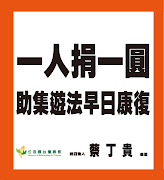
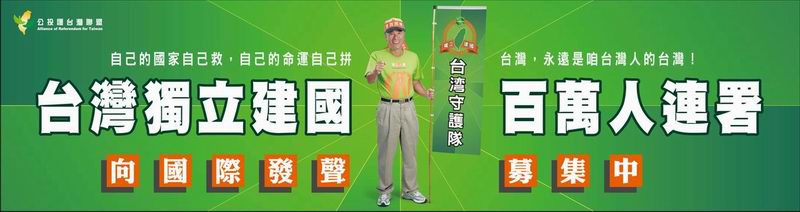
補正公投法,修改立委選制,廢除集會遊行法,非暴力抗爭,推翻中華民國流亡體制,台灣獨立建國
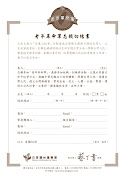
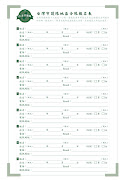
我們經費需要你的支持,我們才有辦法持續運作,特此感謝你的幫助
捐款帳號:0532-940-006394玉山銀行城中分行(代碼:808)
戶名:社團法人台灣公投護台灣聯盟促進會
郵政劃撥:50173536
公投護台灣聯盟總召集人 蔡丁貴 感謝
公投護台灣聯盟執行總幹事 張銘祐
.......................................................................
E-MAIL:ilovefomosa@yahoo.com.tw
MSN:b73717g@yahoo.com.tw我的Blog網址:http://blog.udn.com/2251786
噗浪PLUEK:http://www.plurk.com/ilovefomosa/invite
facebook.com/people/zhang-ming-you/100000064969045
回函請Email:ilovefomosa@yahoo.com.tw, 傳真02-23927597,聯絡電話02-23927590
需要你的支持與認同,如果你無法獻身,請你拿出一小部份的金錢,讓我們持續運作,出錢出力出聲,是台灣社團與人民因該貢獻的一部分!至此感謝
訂閱:
文章 (Atom)